 |
||||||
|
|
Number
286
|
July 2003
|
||||
|
P.O. Box 189, Moffett Field, CA 94035-0189 |
||||||
|
|
||||||
|
||||||
|
|
Number
286
|
July 2003
|
||||
|
P.O. Box 189, Moffett Field, CA 94035-0189 |
||||||
|
|
||||||

Vigilance and adherence to published procedures are critical when operating in or near an airport traffic pattern. Whether the airport is towered or non-towered, certain fundamentals apply to all pattern operations. Clear, concise communications, see and avoid, and use of standardized arrival, approach, and departure procedures provide a pattern for efficiency and safety.
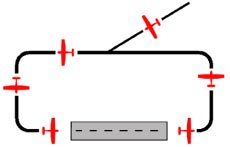
Cutoff on Takeoff
As the pilot of a homebuilt aircraft reported to ASRS, use of the correct procedures for departing a non-towered airport can be "overshadowed" by a less conscientious arrival. Judging from a rather terse communication after landing, it appears that the Cessna pilot may have had an attitude problem.
Old Habit - New Pattern
A Bonanza pilot related how an unfamiliar approach to a familiar field caused some confusion. Proper entry into the traffic pattern is crucial and should be based on situational awareness, not a habit pattern.
After thinking about the incident, I realized what had happened. I have been to this airport many times, but almost always approaching from the northeast and usually landing on Runway 24. This time I approached from the southeast for a base entry to Runway 6. I was intent on looking for my traffic and mistook Runway 14/32 for Runway 6/24. I was looking at the wrong runway and looking for traffic in the wrong place. When I saw the traffic, I thought he was in the wrong place and I became confused, until the Tower told me about flying through the final approach course for Runway 6. I realize that orientation is a full time job, especially when flying in the pattern. When I didn't see the traffic, I should have called the controller and asked for further directions...
Traffic Alert
The
Grumman AA5 pilot who submitted this report got a valuable assist from
an onboard traffic warning system. As the reporter pointed out, traffic
alerting systems do not replace the pilot's responsibility to see and
avoid traffic.
...I failed to see and avoid traffic in the pattern (although it was difficult to see a small helicopter flying a nonstandard pattern). The helicopter pilot was not using his radio, apparently assuming he was the only one around. The major factor in avoiding a collision was the TPAS. It made me aware of traffic that I otherwise would not have seen. While it is relatively unsophisticated, giving only approximate range with no bearing and depends upon active transponders in the other aircraft, it has nevertheless proved its value to me. Still, it is not a substitute for "see and avoid." I need to be more observant.

Flight instruction can be a demanding task, but the process should never demand so much of an instructor's time and attention that safety is compromised. Several recent ASRS reports address some of the more common "unintended" lessons that result from flight training.
Two Pilots Too Busy Training
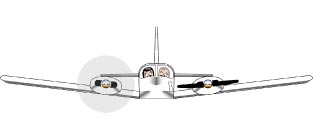 While
an instructor and a student pilot in a twin-engine Seneca were preoccupied
with an engine-out maneuver, a Cessna 152 occupied a growing portion
of their windscreen. Unwittingly, the flight instructor in the Seneca
also provided some free lessons to the Cessna pilot who related the
incident to ASRS.
While
an instructor and a student pilot in a twin-engine Seneca were preoccupied
with an engine-out maneuver, a Cessna 152 occupied a growing portion
of their windscreen. Unwittingly, the flight instructor in the Seneca
also provided some free lessons to the Cessna pilot who related the
incident to ASRS.
It was discovered later that the instructor and student on board the Seneca were both busy with a simulated engine-out, missed approach and failed to locate us until the last minute.... Better coordination of traffic by the Tower, and a more vigilant lookout by the instructor/safety pilot would have prevented this event.
As for myself, I have learned that, even at a towered airport, any doubts about other traffic must be resolved and perhaps earlier evasive action should be taken when a conflict is possible.
Two Pilots Too Busy Training II
A Tower controller reported to ASRS on another incident involving a simulated engine failure in a light twin. Once again, a training maneuver resulted in a traffic conflict that required an evasive maneuver.
In
the next report, a student pilot and a flight instructor in a Cessna
182 RG learned a hard lesson about checklists and distractions. The
instructor also shared a sound lesson about audible warnings.
From the student pilot's report:
I have learned that every landing requires full attention.... Checklists are the only way to make sure that nothing has been missed and, once begun, each checklist must be completed....
From the flight instructor's report:

|
ASRS
Recently Issued Alerts On...
|
|---|
| Jetstream 4100 pitch down incident |
| DA50 auto pressurization controller failure |
| Beechcraft A100 fuel tank access plate leak |
| Hold short lines obscured at a Southern airport |
| Civil/Military traffic conflict at a Southern airport |
|
June
2003 Report Intake
|
|
|---|---|
| Air Carrier/Air Taxi Pilots |
1,736
|
| General Aviation Pilots |
719
|
| Controllers |
32
|
| Cabin/Mechanics/Military/Other |
109
|
| TOTAL |
2,596
|